This summer I had an extraordinary opportunity to join some Finnish friends to a ringing trip around Lapland. I'm very very grateful to Roni, Jarkko, Petteri and Vilppu for such a nice experience!!!
Midnight Sun!
We travelled from the central part of Finland to the northern part, close to the borders of Norway and Sweden. On the way north, we stopped in several places, that complemented very very well the trip I had last year to Finland and Norway. And most importantly, we had a lot of nice birds!!
Visiting old-growth spruce forests was a very magical experience, especially when watching closely some of their nicest inhabitants, such as the Bluetails (Tarsiger cyanurus) or Three-toed Woodpeckers (Picoides tridactylus).
Orange-flanked Bluetail (Tarsiger cyanurus) on its habitat. 2cy (EURING 5) male.
The same bird singing after ringing.
Three-toed Woodpecker (Picoides tridactylus).
Typical Three-toed markings.
Owls and Grouses vary in abundance within years due to population dynamics. For instance, it is well-known that the amount of prey available for owls (mainly rodents) influences to the breeding success and therefore to the abundance of several predator species. In my trip last year, we saw several Hawk Owls (Surnia ulula) since it was a very good year for the species, but not for other owls, and we saw no Black Grouses (Lyrurus tetrix) or even no Willow Grouses (Lagopus lagopus). This year the situation seemed a bit better for Grouses, but it was still not very good for Owls and especially bad for breeding Hawk Owls. Anyway, just in the beginning of the trip, we had a great observation of a Great Grey Owl (Strix nebulosa) perched by the road that I will never forget...
Black Grouse (Lyrurus tetrix), female, with several chicks around.
On the way to the north, we stopped at several places to enjoy some of the greatest treasures of Finland...
Lanceolated Warbler (Locustella lanceolata).
Arctic Warbler (Phylloscopus borealis).
Little Bunting (Emberiza pusilla), male.
Little Bunting on its breeding habitat: wet birch and young Scots pine mixed open forests.
The main target of the trip was to reach the hills in Lapland where Dotterels (Charadrius morinellus) breed. For some years they have been ringing adults and chicks in the breeding grounds. Thanks to the use of white plastic rings, it has been confirmed that they return to the breeding grounds regularly. And this year, in collaboration with other ringers from Finland and from Norway, we helped on deploying geolocators to breeding Dotterels.
Finding the Dotterels in the vast tundra is not so easy, but birds like this one -colour-ringed- are showing they do return to the same areas to breed.
And we could manage to get some. What a pleasure to be able to join a team of truly expert ringers, working on such a iconic species on such a nice habitat!!
There are many nice breeding species up there. The large amount of insects, particularly mosquitos, is (apart from being a bit annoying...) a great food source for many birds. This year, though, the spring arrived quite late, with a very cold May when it snowed quite much everywhere. The breeding season up here is quite short; most of the species are migrants that come here, breed, and leave after to avoid the cold and tough times. So this year, with very late snow and cold spring, most of the species failed the apparently failed the beginning of the breeding or simply skipped it. That was very noticeable in the low densities of waders in good habitats, or the late clutches of several passerines. Still, we managed to see most of the nice species!
Lapland Bunting (Calcarius lapponicus) warning the chicks about our presence.
This Willow Grouse (Lagopus lagopus) was as surprised as us when we caught it!
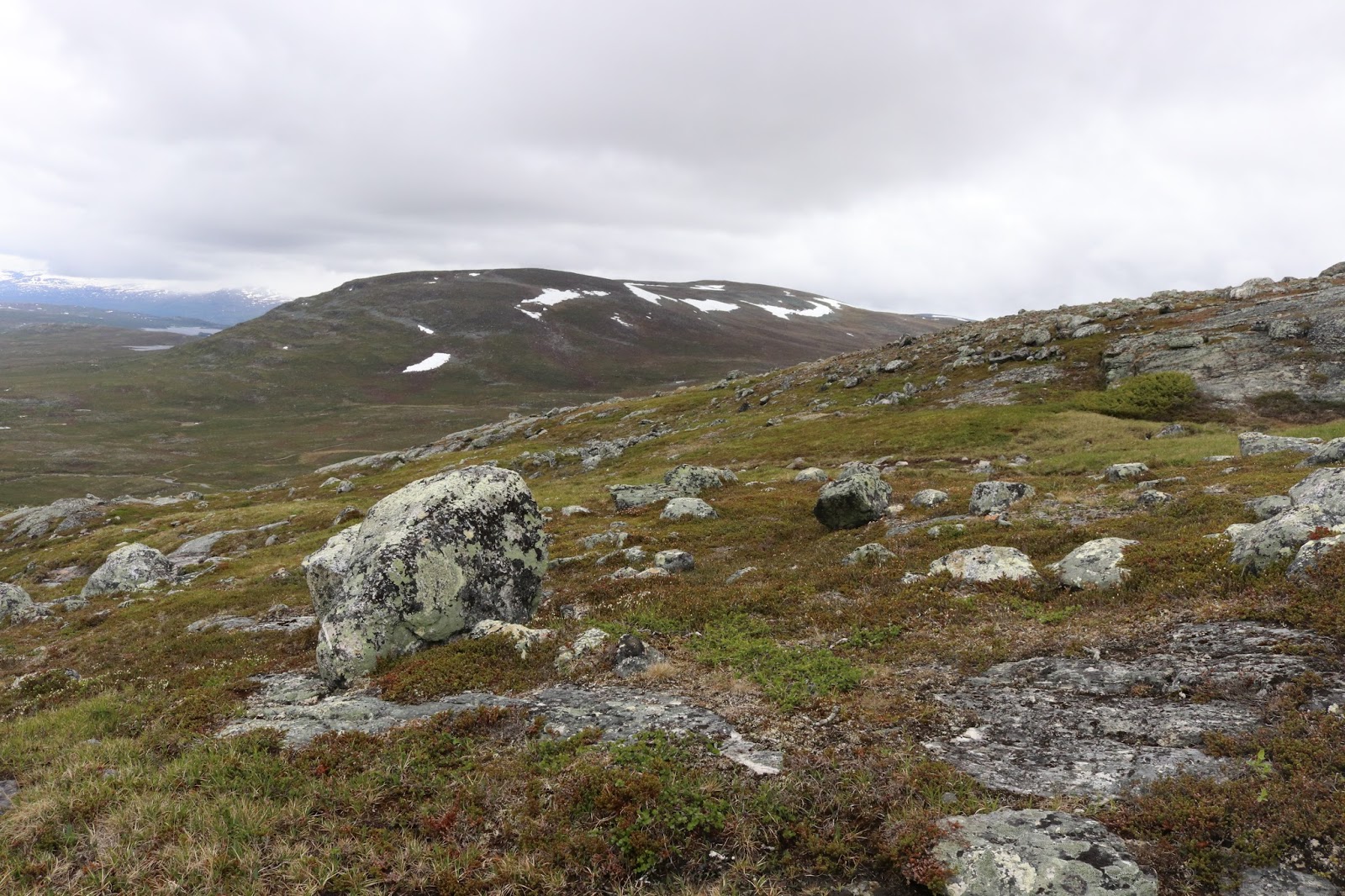
Saana mountain, close to Kilpisjärvi.
In more rocky areas, Ptarmigans (Lagopus muta) and Snow Buntings (Plectrophenax nivalis) appear. We were lucky to see several individuals from both species, and also to get some!
Ptarmigan habitat...
Snow Bunting habitat.
We could ring this 2cy (EURING 5) male. GC10 (innermost) was moulted on the postjuvenile moult, and it keeps the juvenile 'dirty' primary coverts and secondaries.
This adult (EURING 6) male shows clean white primary coverts, as well as less worn flight feathers.
On the birch forests that grow on the sides of the tundra fjäll, there are several very nice bird species breeding.
Suddenly, lakes may appear and they usually are packed with very interesting waders, such as breeding Red-necked Phalaropes (Phalaropus lobatus) and Temminck's Stints (Calidris temminckii).
Red-necked Phalarope, male.
Temminck's Stint (Calidris temminckii).
We could ring this very nice Temminck's, one of the species that has been studied recently to reveal their amazing journeys from the breeding grounds in the tundra to the far south wintering sites. For more information about Temmick's migration I recommend this paper Lislevand & Hahn 2015.
In lower areas, extensive mires are the home of several other wader species, such as Wood Sandpipers (Tringa glareola), Ruffs (Calidris pugnax), Broad-billed Sandpipers (Calidris falcinellus)... It was amazing to see the latter species displaying in flight!
Siberian specialities such as the Siberian Jay (Perisoreus infaustus) or Siberian Tit (Poecile cinctus) are found more commonly in old-growth Scots Pine (Pinus sylvestris) forests, that are usually quite well-covered by lichens.
Siberian Tit on its habitat.
Female and male Siberian Tits, sexed on broodpatch/cloaca respectively. Males seem to have darker bib and lores, as well as slightly more purple tinged head than females.
Closeby, we ringed a family of Dippers (Cinclus cinclus cinclus). I was expecting the adults to be completely black in the underparts, without this broad brownish-red 'belt'.
Between hiking journeys to reach Dotterel's breeding areas, we also had some time for the interesting ringing of some breeding Redpolls (Acanthis flammea) and also some Twites (Linaris flavirostris).
Redpoll (Acanthis flammea).
Twite (Linaria flavirostris).
Primary shape (and, used carefully, also primary wear) can be a good ageing tip for both species. Here an example with Twites, an adult (EURING 6) male on the left and a 2cy (EURING 5) female to the right. Notice the pinkish feathers on the rump that enable the sexing as male on the left bird.
Having deployed some geolocators to some Dotterels and enjoyed most of the local breeding birds, we started our journey back to the south, having some more interesting stops on the way. If you are a foreigner you may love to see a Moose (Alces alces) this close to the road, but then you realise how big they are and how you prefer them to be away from the roads.
Among others, we had a brief stop to check Blyth's Reed Warblers (Acrocephalus dumetorum), which was very interesting for me! They really feel different from a Reed Warbler, especially in hand..
Other highlights were these two nice species!
Whimbrel (Numenius phaeopus) chick.
Corncrake (Crex crex).
A really amazing trip that I will always thank my Finnish friends: Kiitoksia!!!
As last year, this June we spent a week looking for breeding birds and evidences for the European Breeding Birds Atlas 2 (EBBA2), in collaboration with the Hellenic Ornithological Society (HOS) and the Catalan Ornithological Institute (ICO). This year's expedition team was composed by Martí Franch, David Funosas and me, and we surveyed the NE part of Greece, through Rhodope mountains following (more or less) the border with Bulgaria, and to Thrace region right before the border with Turkey. Thank you for these days! And special thanks to Danae Portolou too, who was behind the organisation of the squares and logistics of the trip.
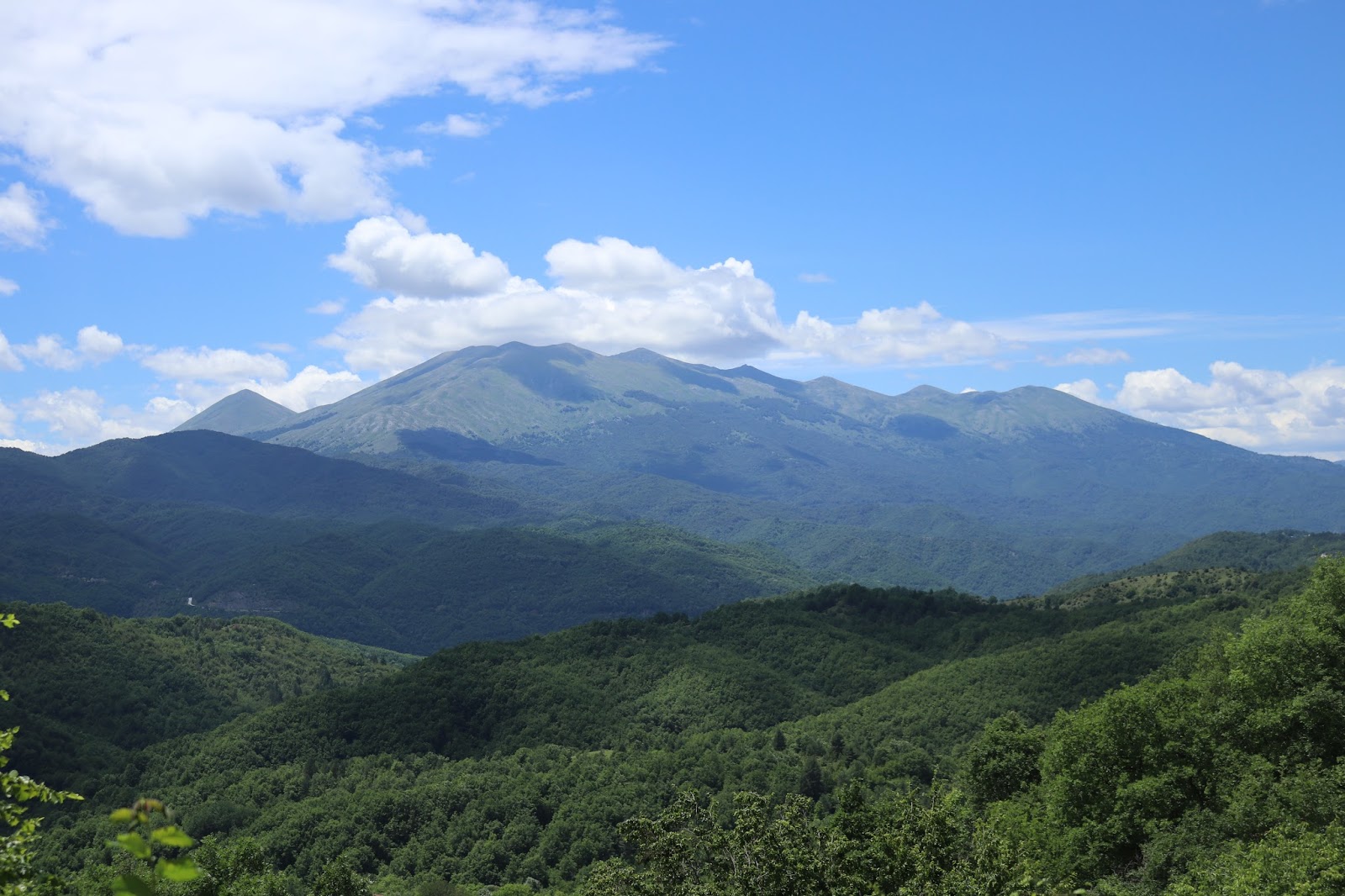
We started in the mountains, through Fir forests, mixed with Scots Pine (Pinus sylvestris) and several decidious trees species, including extensive Beech(Fagus sylvatica) forests.
So we started with the usual set of species for this kind of forests, including several Goldcrests (Regulus regulus) and also Firecrests (Regulus ignicapilla), several Coal Tits (Periparus ater), Nuthatches (Sitta europaea)...
The amount of Woodpeckers is remarcable in the whole country, with all European species present. White-backed (Dendrocopos leucotos) and Three-toed (Picoides tridactylus) are present in the Rhodope mountains, but sadly we didn't manage to see them. Nonetheless, we succeded with the rest: Lesser Spotted, Middle Spotted, Great Spotted, Syrian, Green, Grey-headed and Black. Indeed, no Wrynecks were detected.
Great Spotted Woodpecker (Dendrocopos major), right after
feeding the chicks.
Grey-headed Woodpecker (Picus canus). We only detected a
couple, with the female in the pictures.
This year we visited an area with a much lower density of Brown Bears (Ursus arctos), that was one of the highlights of last year's trip. We weren't pleased to see any, but the signs at the rubbish bins were informing:
We did see two other joys from the forest: Hazel Grouse (Bonasa bonasia) and SpottedNutcracker (Nucifraga caryocatactes).
Open rocky areas, where the forest ends, provided an interesting set of species, such as Yellowhammer (Emberiza citrinella), European Stonechat (Saxicola rubicola) and Barred Warbler (Sylvia nisoria)!
Barred Warbler (Sylvia nisoria), female
Red-rumped Swallows (Cecropis daurica) and Red-backed Shrikes (Lanius collurio) are also very common in this habitat, but indeed, they are found in several kind of habitats and altitudes.
Going down in the mountains, soon the forest is dominated by Hungarian Oaks (Quercus frainetto), Kermes Oak (Quercus coccifera ssp. calliprinos) and other mediterranean species. There, different species may occur depending on the habitat structure, based on vegetation coverage, related to slopes orientation, soil composition, grazing activities, and several other factors.
Ortolan Buntings (Emberiza hortulana), Middle Spotted Woodpeckers (Dendrocopos medius), Eastern Black-eared Wheatears (Oenanthe (hispanica) melanoleuca), Eastern Subalpine Warblers (Sylvia cantillans albistriata), Sombre Tits (Poecile lugubris), Eastern Orphean Warblers (Sylvia crassirostris), Blue Rock Thrushes (Monticola solitarius)...are some of the present species in these habitats.
Male Eastern Black-eared Wheatear (melanoleuca). Black
in the lores reaches the upper base of the bill. Also, the black
'ears' are connected to the wing through a faint black line.
This latter feature is very variable, but seems to not occur
on the western hispanica populations.
A juvenile Sombre Tit (Poecile lugubris) wanted to join
in the picture!
It was very interesting to check several Eastern Subalpine Warblers (Sylvia cantillans albistriata). At this time of the year they are more worn, and they seem to have lost most or all the white tips in the throat feathers. Check these pictures from ringed birds this spring in Western Mediterranean for more detail information.
Breast deeply coloured in the throat. R5 shows a lot of white in the tip. Primary projection also gives a longer impression.
Another individual showing the characteristic tail pattern.
Eastern Orphean Warbler (Sylvia crassirostris).
Black Storks (Ciconia nigra) are also quite regular in the
region, becoming more common as we were heading to the
east.
Spur-tighed Tortoises (Testudo graeca) can turn up anywhere!
Some very nice flowers can be found commonly, such as the Dragon Arum (Dracunculus vulgaris).
Or this Lizard Orchid (Himantoglossum caprinum).
Leaving the Mediterranean forests, the lowlands landscape is covered by agricultural land. Interestingly, most of fields are small and surrounded by trees and bushes, the denominated bocage agricultral landscape, which is far from the extensive agricultural practises. Probably this is one of the factors that allow the great numbers of insects everywhere. For instance, the amount of grasshoppers was surpsising in several spots, or the clouds of moths at night around the lights on the streets. And all of this is food for the birds, that can reach much higher densities in this landscape than in the extensive agriculture.
Black-headed Buntings (Emberiza melanocephala) are one of the commonest passerines in this habitat. Males are bright yellow and sing very exposed, usually from the top of a bush, but females are much more secretive.
Black-headed Yellow Wagtails (Motacilla flava feldegg) are also very common in this habitat.
Spanish Sparrows (Passer hispaniolensis) are usually seen in flocks through the agricultural landscape, but most of nests that we found were on riparian forests (especially on plantations) and in White Storks (Ciconia ciconia) nests, where they breed together.
Probably thanks to the high numbers of insects and to the trees and bushes to perch, hunt and nest, Shrikes are represented in the area with a good number of species. Red-backed Shrikes (Lanius collurio) can be found also in some areas with agricultural landscape, and also Lesser Grey Shrikes (Lanius minor), Eastern Woodchat Shrikes (Lanius senator niloticus) and Masked Shrikes (Lanius nubicus) appear.
Lesser Grey Shrike (Lanius minor).
Woodchat Shrike (Lanius senator niloticus).
Masked Shrike (Lanius nubicus), male. We found them in bushes close to the rivers across the drylands...
... and also nesting in riparian forests, dominated by Populus nigra and Populus alba.
Eastern Olivaceous Warblers (Iduna pallida elaeica) are among the commonest passerines too. They are almost present anywhere with bushes! And are usually quite active, not allowing long observations.
Olive-tree Warblers (Hippolais olivetorum) are also present, in mature Oak tree forests or even in isolated Trees, surrounded by bushes between the fields. They are surprisingly elusive, singing from the inside of the vegetation and allowing very brief observations. This picture below is the best I could get after quite a long time trying...
We could enjoy some Levant Sparrowhawks (Accipiter brevipes) too, like these two adult males, already moulting.
The latter was hunting some Eastern Oliv. Warblers in a extensive tamarisk area, with a very big reedbed besides Nestos Lake. There, we had good numbers of Reed (Acrocephalus scirpaceus) and also Marsh Warblers (Acrocephalus palustris), as well as Great Reed Warblers (Acrocephalus arundinaceus) and Little Bitterns (Ixobrychus minutus). Lapwings (Vanellus vanellus) and Collared Pratincoles (Glareola praticola) were present, probably breeding, such as Little Tern (Sternula albifrons), Common Tern (Sterna hirundo) and even Black Tern (Chlidonias niger). We also had two adult White-winged Terns (Chlidonias leucopterus), that could be still late migrants. At dusk, while searching for night singers, we could enjoy at least 3 Golden Jackals (Canis aureus). The picture is just testimonial, since it was alredy quite late in the day!
A family of Penduline Tits (Remiz pendulinus) was the best way to get the highest breeding evidence in this square.
On our way to Thrace, we had a visit to the Dadia Forest National Park. The amount of raptors in the area was quite nice to enjoy, especially thanks to the real show that this Lesser Spotted Eagle (Aquila pomarina) offered.
We also had very nice views of Black Vulture (Aegypius monachus) and Egyptian Vultures (Neophron percnopterus).
We visited a feeding place for vultures that you can acces from the Information Centre at the Dadia Forest National Park. It was nice to see the three vultures feeding there, but sadly no Lammergeiers are left in continental Greece. Nonetheless, I found very interesting to see an adult White-tailed Eagle (Haliaeetus albicilla) eating among them! As we have the 4 vulture species in Catalunya feeding together, I wonder in how many places you can see three vultures and White-tailed Eagles...
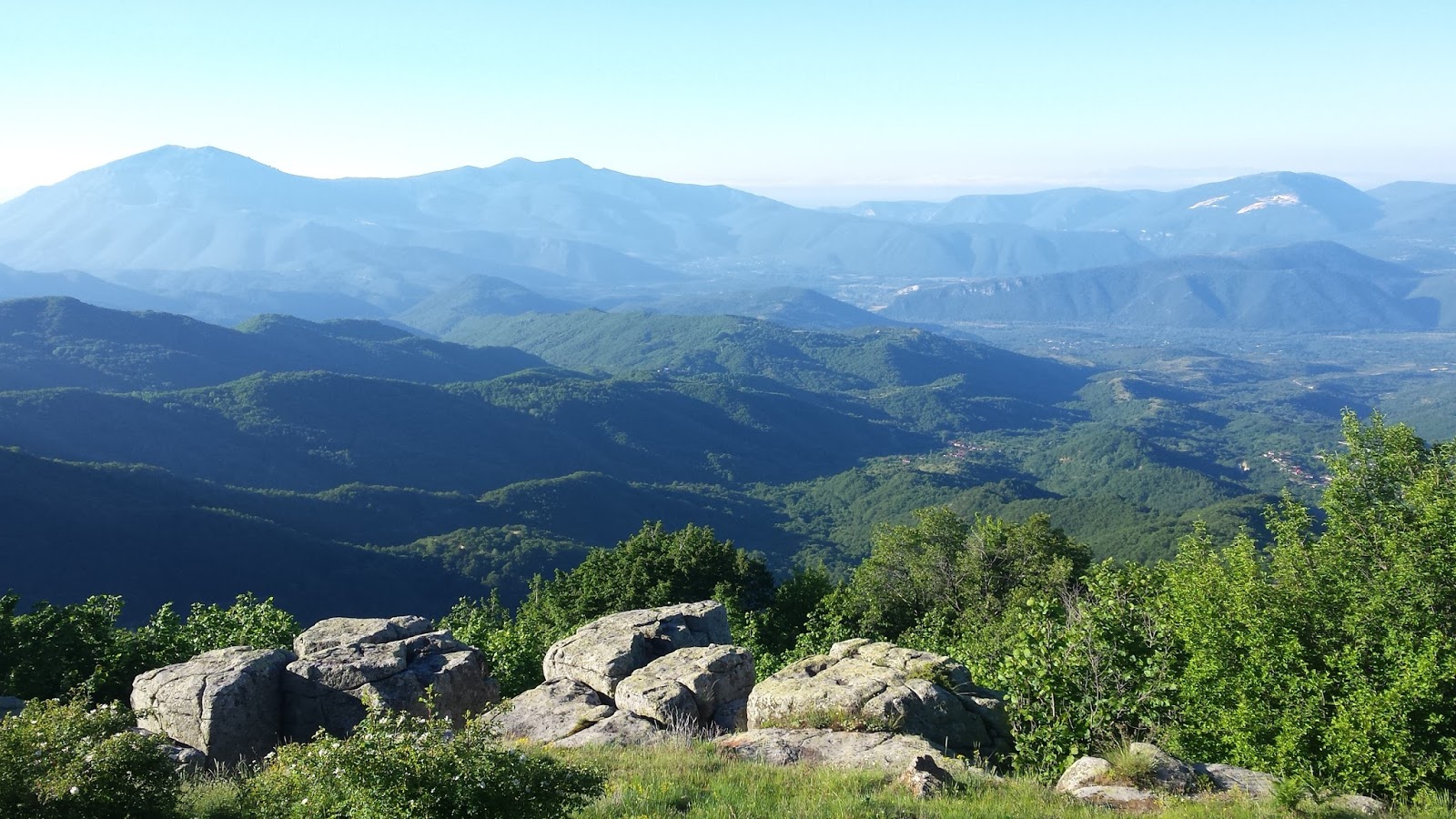
The last stop we had was already on the way back to Thessaloniki, We stopped at Pangaion mountain, which was surprinsingly high: almost 2000 m right besides the Mediterranean Sea. There's even a Ski station up there, so you might be able to do it while watching the Mediterranean Sea in front of you... We had great views up there of some Balkan Horned Larks (Eremophila alpestris balcanica). Nice way to farewell the country!